
Vacuum Blasting Systems for Controlled Surface Restoration
Remove graffiti, coatings and contamination while recovering used media and debris directly at the surface.
No water
Integrated extraction
Controlled abrasion

What Is Vacuum Blasting?
Vacuum Blasting is a controlled, low-abrasion cleaning process that combines selected blasting media with an integrated vacuum system.
Contaminants are removed and extracted simultaneously, helping keep the work area clean and contained throughout the process.
Unlike jet washing, Vacuum Blasting does not rely on high-pressure water. It also reduces reliance on chemical cleaning and open abrasive blasting.
This makes it particularly valuable for sensitive surfaces, indoor environments and public spaces where control and cleanliness are essential.
Controlled Blasting
The cleaning media and system configuration can be selected to suit the surface and contamination.
Surface-Level Extraction
Used media and loosened contamination are recovered directly through the blasting hood.
Closed-Loop Cleaning
Reusable media is separated and returned to the system while fine dust and coarse particles are contained.
Why We Partner With Systeco
Specialist Engineering. Controlled Cleaning. Proven Results.
Systeco develops the Tornado ACS Vacuum Blasting system—a specialist surface-cleaning solution that combines controlled blasting with immediate extraction.
The system is designed to clean, strip and prepare surfaces while recovering blasting media and loosened contamination directly at the working area.
As a Systeco partner, Titus Equipment helps customers assess their surface, working environment and contamination before recommending the most appropriate system configuration.
Discuss your application
Controlled cleaning with extraction at source
Why Professionals Choose Vacuum Blasting
Vacuum Blasting is adopted when surface protection, site control and responsible working practices matter.
No Water or Runoff
Eliminate water ingress, saturation and contaminated runoff from the cleaning process.
Controlled Abrasion
Media and settings can be selected to match sensitive surfaces and restoration requirements.
Integrated Extraction
Used media and loosened debris are captured directly at the working surface.
Reduced Public Disruption
A contained process suited to public, occupied and high-visibility locations.
No Harsh Cleaning Chemicals
Remove contamination without relying on chemical-heavy cleaning methods.
Indoor and Controlled Environments
Suitable for locations where cleanliness, containment and site control are essential.
Common Vacuum Blasting Applications
Explore controlled surface-cleaning applications for public, commercial and restoration environments.
Graffiti Removal
Remove graffiti from brick, stone, concrete and masonry without high-pressure water or chemical runoff.
Heritage & Stone
Controlled restoration where surface integrity and protection of the original material matter.
Paint & Coating Removal
Strip coatings and prepare structural or architectural surfaces using a contained process.
What Vacuum Blasting Replaces
Vacuum Blasting is often adopted when conventional cleaning methods introduce water, chemicals, excessive mess or unnecessary surface risk.
 Traditional Chemical Cleaning
 Labour-Intensive Methods
- × Jet washing
- × Chemical graffiti cleaning
- × Manual scraping and brushing
- × Traditional open abrasive blasting
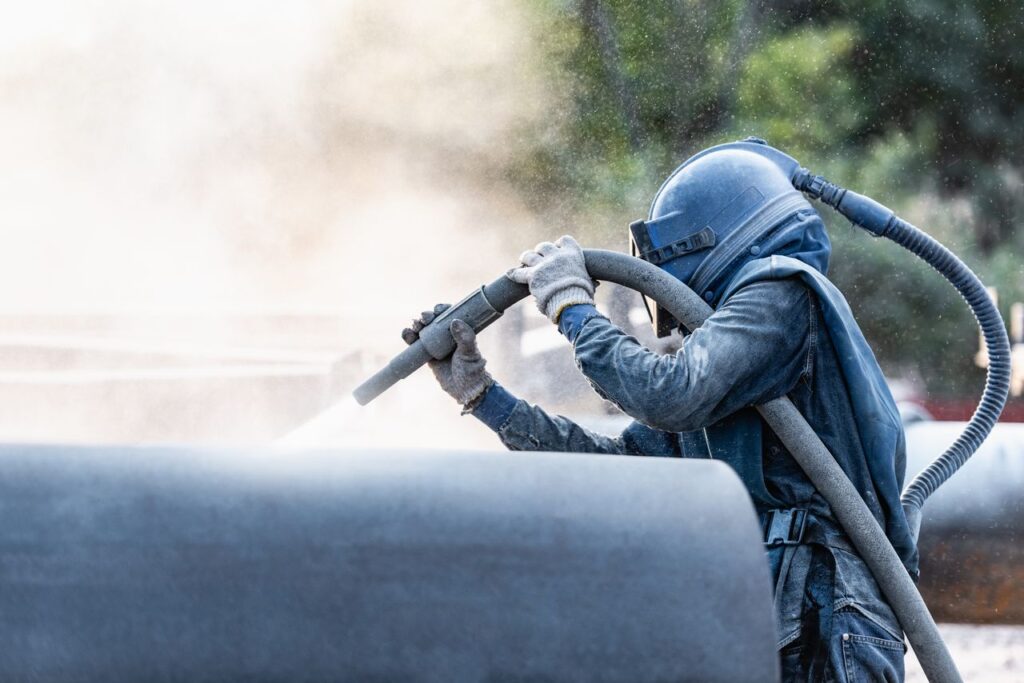
These methods can introduce water damage, surface etching, chemical exposure, uncontrolled debris or extensive secondary cleanup.
Clean, Extract and Contain in One Controlled Process
Vacuum Blasting offers a more controlled approach when water, chemical exposure, excessive mess and public disruption are unacceptable.
Request System PricingHow Vacuum Blasting Works
The Tornado ACS cleans, extracts and separates material through one continuous, controlled process.

Integrated blasting, extraction, separation and media recovery.
-
01
Position
Position and Seal
The jet hood is placed against the surface and held securely in position by vacuum.
-
02
Introduce
Feed the Blasting Media
Granules are gravity-fed from the storage container through the dosing system and into the airflow.
-
03
Clean
Controlled Surface Cleaning
Media is delivered through the jet lance to clean, strip or prepare the surface with controlled abrasion.
-
04
Monitor
Maintain Visual Control
Integrated vision panels allow the operator to monitor and control the cleaning process as it happens.
-
05
Extract
Immediate Extraction
Used media and loosened contamination are extracted immediately through the suction hose.
-
06
Separate
Separate and Reuse
Fine dust is filtered, reusable granules return to storage and coarse particles are retained separately.
The result is effective surface restoration without the uncontrolled mess associated with traditional methods.
Is Vacuum Blasting Right for Your Application?
Every surface and working environment is different. Material, contamination, access, location and the required finish all influence the correct system configuration.
Tell our specialists what you need to clean and we will help determine whether Vacuum Blasting is the right solution.
Restore Surfaces Without Unnecessary Disruption
We’ll review your surface, location and contamination before recommending the most appropriate next step.
Request System Pricing No obligation. Application-specific guidance.