
Food & Pharmaceutical Cleaning Without Moisture, Residue or Long Downtime
Remove product build-up, oils and contamination from production equipment without introducing unnecessary water, harsh cleaning chemicals or secondary blasting media.
Dry cleaning process
Minimal secondary residue
Controlled and repeatable
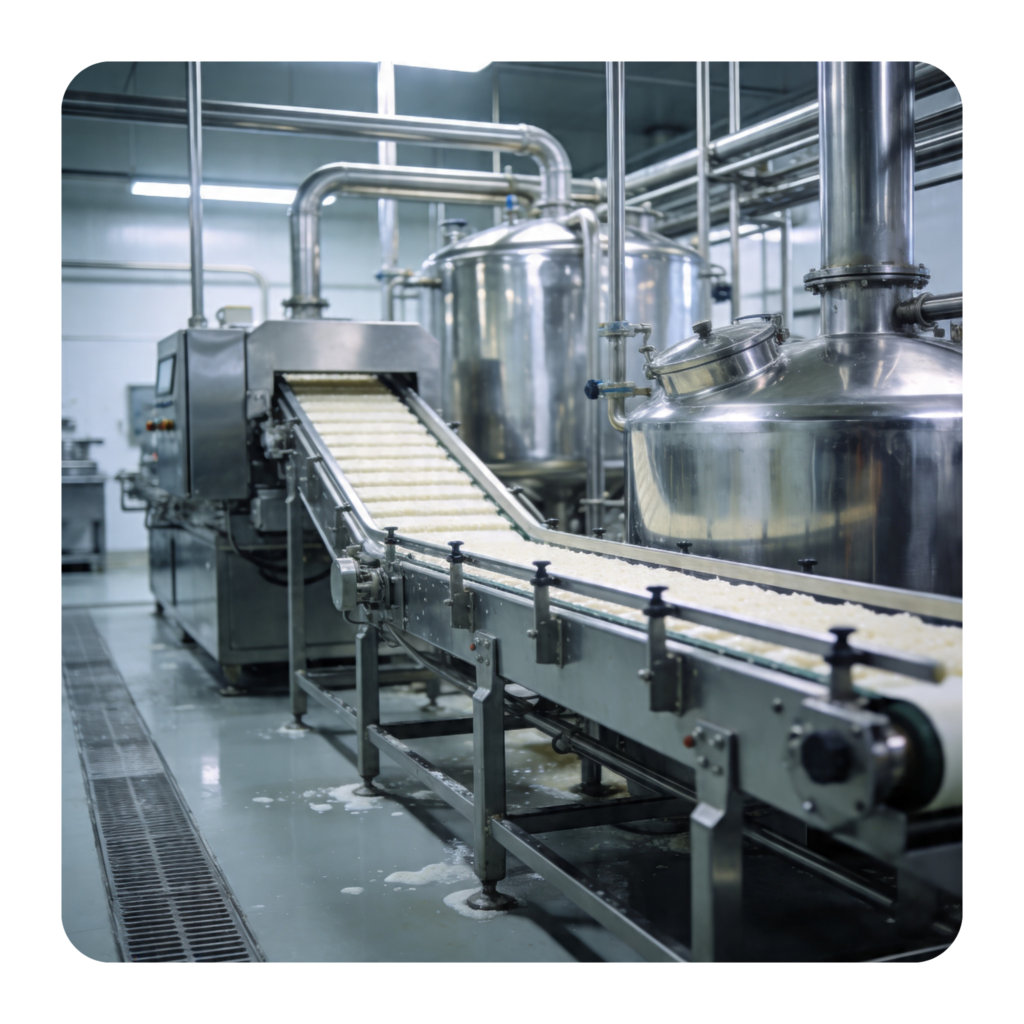
Cleaning Here Isn’t Just Maintenance
It’s compliance. It’s safety. It’s process control.
When product residue, oils or contamination begin affecting production equipment, the margin for error quickly disappears.
Moisture Introduces Risk
Water can spread contamination, enter sensitive areas and create additional drying requirements.
More variables to controlChemicals Add Complexity
Chemical cleaning can require additional handling, rinsing and verification before equipment returns to use.
Additional process stepsManual Cleaning Takes Time
Scraping and brushing detailed equipment increases labour time and operator exposure.
Longer cleaning windowsDowntime Impacts Output
Extended shutdowns for cleaning, drying and secondary cleanup directly affect production.
Lost operational timeYou’re not just trying to clean the equipment. You’re trying to clean it properly without creating another process problem.
Why Dry Ice Blasting Works
Dry Ice Blasting is suited to production environments where cleanliness, control and minimal secondary residue matter.
No Moisture Introduced
Dry ice sublimates on impact and does not leave liquid behind on the cleaned equipment.
Minimal Secondary Residue
There is no spent blasting media to collect—only the contamination removed from the surface.
Reach Detailed Areas
Clean complex equipment, joints and difficult areas that are time-consuming to reach manually.
Reduce Chemical Reliance
In suitable applications, Dry Ice Blasting can reduce or eliminate reliance on certain cleaning agents.
Shorter Cleaning Windows
Reduce time spent on labour-intensive cleaning, rinsing and drying stages.
Repeatable Process
System settings can be documented and repeated to support consistent cleaning procedures.
Where Dry Ice Blasting Fits
Used where production build-up needs to be removed while maintaining control over the surrounding environment.
Processing Equipment
Remove product build-up and contamination from production and processing machinery.
Production cleaningConveyors & Transfer Systems
Clean belts, frames and difficult areas around product transfer equipment.
Detailed accessFilling & Packaging Machinery
Remove build-up from detailed packaging and filling equipment using a dry process.
Dry cleaningMoulds & Tooling
Clean production residue from moulds, tooling and detailed manufacturing components.
Surface controlledMixers, Hoppers & Vessels
Target adhered residue and build-up in production equipment where access is difficult.
Build-up removalHard-to-Reach Areas
Reach joints, recesses and detailed areas that require extensive manual cleaning.
Reduced labourDry Ice Blasting is a cleaning method, not an automatic sanitisation or sterilisation process. Suitability and any hygiene validation must follow your facility’s approved procedures and risk assessment.
See Whether It Works for Your Process
We assess your cleaning requirement before recommending a system or configuration.
-
01
Enquiry
Tell Us About the Process
Describe the equipment, residue, current cleaning method and operational requirements.
-
02
Assessment
We Review the Application
We assess the surface, build-up, access, cleaning controls and required outcome.
-
03
Demonstration
Test a Real Cleaning Task
Where appropriate, see the recommended method working against your actual production build-up.
-
04
Recommendation
Receive the Right Setup
We recommend the system, configuration and next steps suited to your cleaning requirement.
Every recommendation is based on the equipment, contamination and operational controls within your environment.
Questions Before You Enquire?
Key points to consider when assessing Dry Ice Blasting for a hygiene-sensitive production environment.
Ask About Your ApplicationDoes Dry Ice Blasting introduce moisture? +
No. Dry ice sublimates on impact, transitioning directly from solid to gas without leaving liquid water behind.
Is it suitable for hygiene-sensitive environments? +
Dry Ice Blasting is used where controlled cleaning is required. Suitability depends on the equipment, process, contamination and facility-specific hygiene requirements.
Does it leave residue behind? +
Dry ice leaves no spent blasting media. The contamination removed from the equipment must still be appropriately collected and managed.
Can it reduce the need for cleaning chemicals? +
In suitable applications, it can reduce or eliminate reliance on certain cleaning agents. This depends on the contamination and your approved cleaning procedures.
Will it disrupt production? +
It is often used to shorten cleaning windows and reduce disruption compared with labour-intensive wet or manual methods. The exact saving depends on the application.
Does Dry Ice Blasting sanitise or sterilise equipment? +
Dry Ice Blasting should be treated as a cleaning process. Any sanitisation, sterilisation or hygiene-validation requirements must follow your facility’s approved procedures.
Tell Us What You’re Dealing With
Send us details of the equipment, product build-up, current method and cleaning window. We’ll explain how Dry Ice Blasting could work within your operation.
Assess Your Cleaning Process
We’ll review your cleaning requirement and recommend the most appropriate next step.
Enquire About Your Application No obligation. Application-led guidance.