
Clean Heritage & Stone Without Over-Abrasion or Loss of Detail
Remove suitable contamination, build-up and selected coatings while maintaining greater control over the original material beneath.
Non-abrasive cleaning media
Dry process
Test-led approach
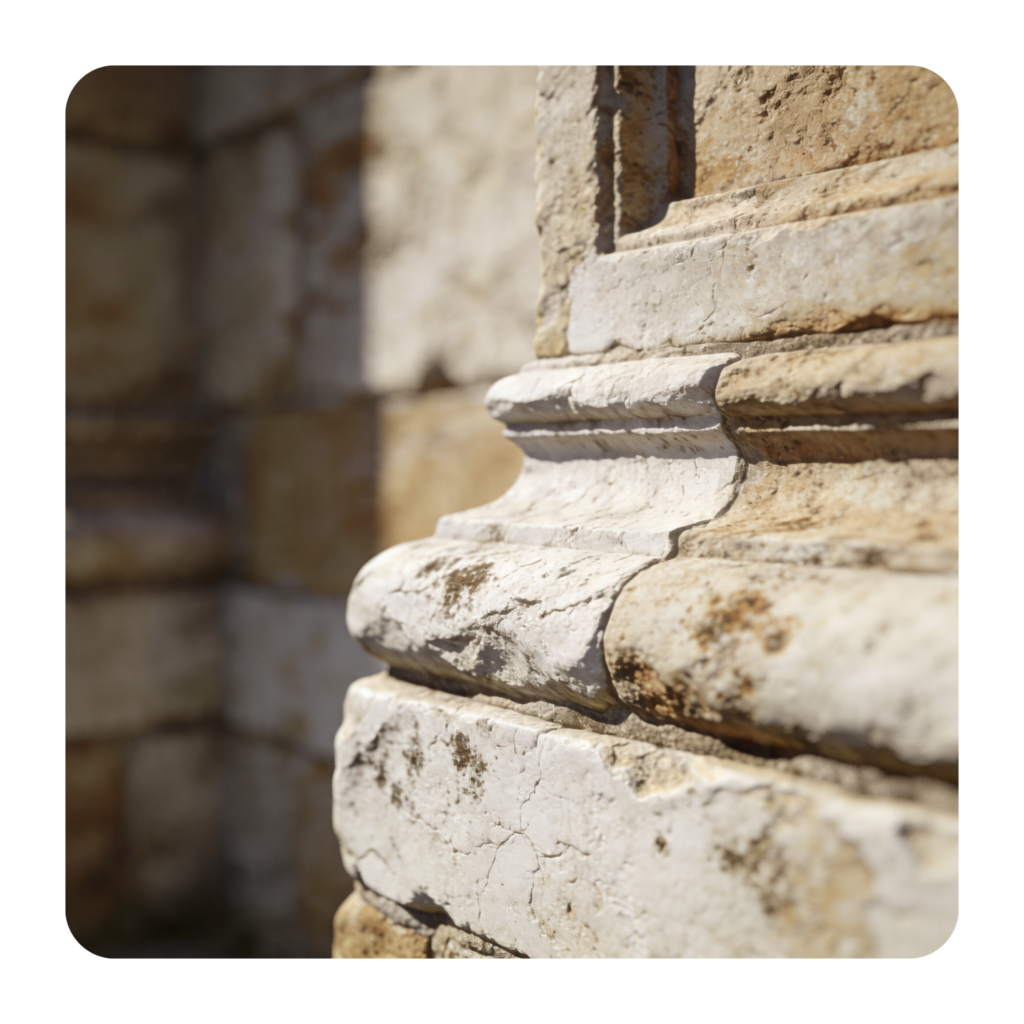
Heritage Surfaces Leave No Room for Guesswork
Age, texture, detail and condition all influence the method.
Once cleaning begins, any loss of original material may be irreversible. The process must remove what is unwanted without unnecessarily altering what needs to be preserved.
Aggressive Pressure
Excessive pressure can erode softer material, scar the surface or remove original detail.
Irreversible surface lossAbrasive Blasting
An overly aggressive media can remove more than the contamination and permanently alter the finish.
Texture and detail at riskChemical Cleaning
Chemicals can react with historic materials, cause staining or leave residue within porous surfaces.
Unwanted reactions and residueManual Cleaning
Hand cleaning detailed stonework can be slow, inconsistent and difficult to control across larger areas.
High labour and variable finishYou’re not simply trying to clean the surface. You’re trying to preserve its material, character and detail.
Why Dry Ice Blasting Works
Dry Ice Blasting uses non-abrasive CO₂ pellets and adjustable system settings to provide a controlled approach to suitable heritage and stone-cleaning applications.
Non-Abrasive Media
Dry ice pellets do not introduce a hard abrasive media against the original surface.
No Water Saturation
The dry process avoids driving water into porous stone, joints and historic masonry.
Reach Detailed Areas
Clean intricate, textured and uneven surfaces that are difficult to treat consistently by hand.
Minimal Secondary Media
Dry ice sublimates on impact, leaving no spent blasting media across the work area.
No Harsh Cleaning Chemicals
Reduce reliance on chemical-heavy cleaning methods and their associated residue.
Adjustable and Testable
Pressure, pellet flow and nozzle selection can be tested and adjusted for the specific surface.
Where Dry Ice Blasting May Fit
Used where preservation matters as much as cleaning and the original surface cannot simply be replaced.
Historic Stone Façades
Assess contamination and build-up across external stone elevations and architectural surfaces.
External stoneHistoric Masonry
Clean selected brick and masonry surfaces where water saturation or hard abrasion is unsuitable.
Porous materialsDecorative Stonework
Reach carvings, mouldings, joints and detailed areas that are difficult to clean consistently by hand.
Intricate detailsMonuments & Features
Assess suitable monuments, memorials and architectural features where material preservation is critical.
Surface assessedSoot & Surface Build-Up
Target suitable atmospheric deposits, soot, carbon and accumulated surface contamination.
Contamination removalSelected Coatings & Residue
Test selected coatings, residues and deposits to determine whether controlled removal is achievable.
Test area requiredHistoric and listed structures may require conservation input, listed-building consent or approval from the relevant authority. A representative test area should always be completed before wider cleaning.
The Material Determines the Method
We assess the substrate and its condition before recommending any equipment configuration.
-
01
Identify
Understand the Material
Identify the stone, masonry, finish, age and conservation requirements.
-
02
Inspect
Assess Its Condition
Review deterioration, softness, previous repairs and the type of contamination present.
-
03
Test
Complete a Test Area
Start with conservative settings and assess the cleaning result before wider application.
-
04
Recommend
Define the Correct Setup
Recommend the appropriate system, settings and next steps based on the test.
Every recommendation is based on the material, condition and required finish—not a generic cleaning specification.
Why a Test Area Matters
Heritage surfaces can vary across the same building. Weathering, repairs, previous coatings and differences in material condition can all affect the cleaning response.
A test area allows the cleaning effect, surface response and final appearance to be assessed before any wider commitment.
Discuss a Test ApplicationConfirm Surface Response
Check for erosion, marking or unwanted visual change.
Confirm Cleaning Performance
Assess whether the contamination releases effectively.
Agree the Desired Finish
Confirm how much patina or historic character should remain.
Record the Settings
Document the system configuration for repeatable work.
Questions Before You Enquire?
Key considerations when assessing Dry Ice Blasting for historic, fragile or irreplaceable materials.
Ask About Your SurfaceWill Dry Ice Blasting damage the stone? +
Suitability depends on the stone, its condition and the selected settings. Dry ice is non-abrasive media, but pressure, pellet flow and thermal response still need to be assessed through a test area.
Is it too aggressive for heritage work? +
It can provide a controlled option for suitable surfaces, but it is not automatically appropriate for every historic material. The least aggressive effective setting should be established through testing.
Can it remove coatings or staining? +
Some coatings, soot and surface deposits may respond well. Results depend on their composition, thickness, bond and the condition of the underlying surface.
Will it change the appearance of the material? +
Any cleaning can reveal colour variation, historic repairs or differences in weathering. A test area allows the expected appearance to be reviewed before wider cleaning.
What residue is left after cleaning? +
The dry ice sublimates and leaves no spent blasting media. The contamination released from the surface must still be collected and managed appropriately.
Can it be used on a listed building? +
Cleaning a listed building may require consent and input from a conservation professional or the relevant authority. Approval should be confirmed before work begins.
Tell Us What You Need to Clean
Send us details of the material, contamination, condition and desired finish. We’ll explain whether Dry Ice Blasting may be suitable and recommend the appropriate next step.
Protect the Surface While Addressing the Contamination
We’ll review the material and application before recommending any equipment setup.
Enquire About Your Application No obligation. Surface-led guidance.