Titus Equipment · Getting started guide
Getting started in dry ice blasting means understanding the cleaning work you want to take on, the compressed air and dry ice the process needs, and the equipment that fits your intended applications. This guide walks you through those first decisions and compares the ICS machine range.
Whether you are considering dry ice blasting as a new service or adding it to an existing operation, start with the jobs you expect to do—not with the biggest machine in the range. We explain the practical requirements, then compare the ICS IC 021, IC 022 EVO, IC 030, IC 110 E, IC 310, IC 310 S, IC 410 and IC 410 S using their published specifications and linked datasheets.
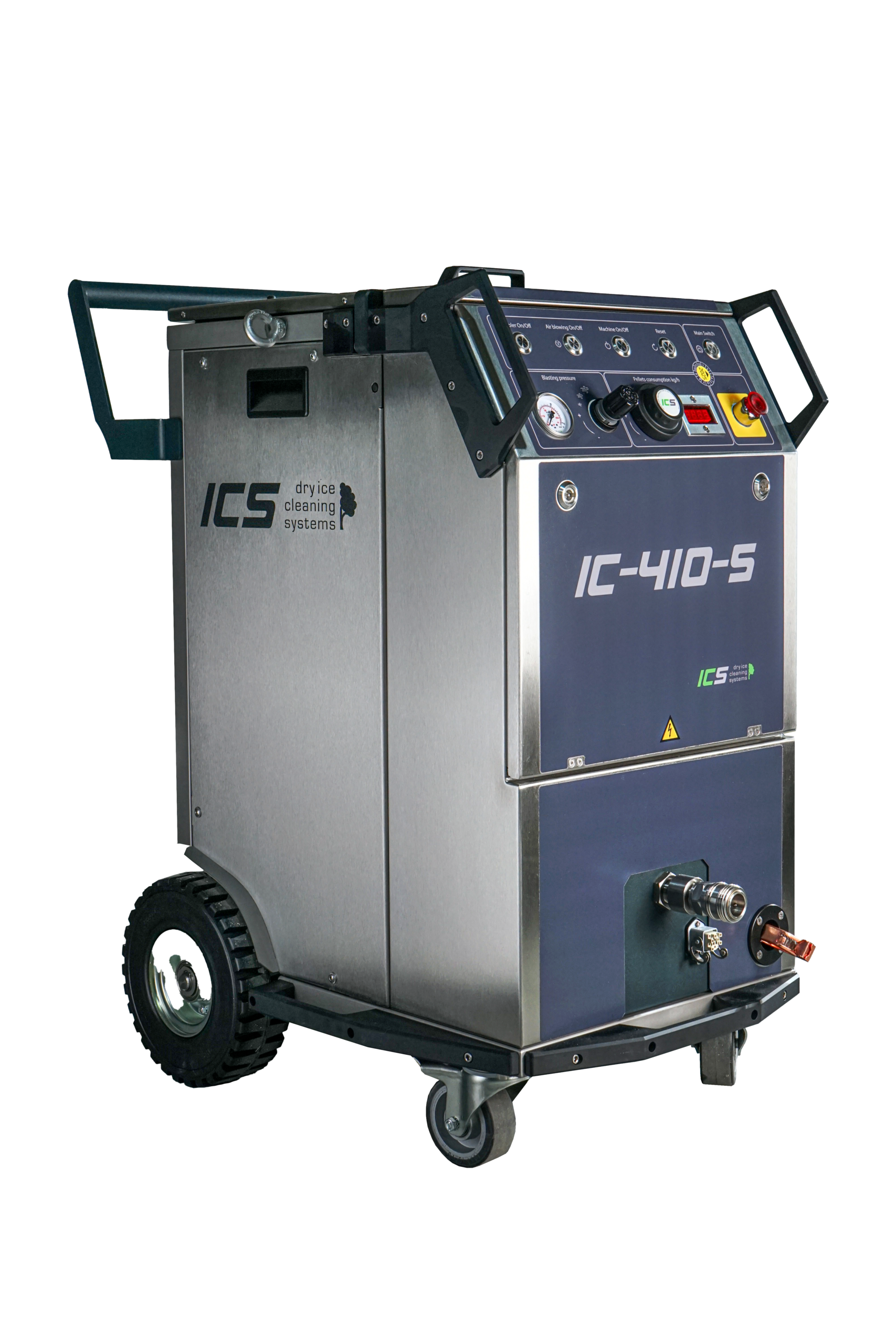
How to get started in dry ice blasting
1. Define the cleaning task
Identify the contaminant, the underlying surface and the result required. Removing grease from a robust component is different from cleaning a polished mould, electrical assembly or delicate finish. Dry ice blasting is a non-abrasive process, but impact, air pressure, temperature change, nozzle and operating settings still matter. It is not a universal coating or corrosion removal method.
2. Estimate your workload
Think about job size, frequency, run time and whether the machine stays in one workshop or travels. A small hopper may be perfectly workable for intermittent cleaning or short jobs. A larger hopper can reduce refilling interruptions during longer work, but it adds to machine size and dry ice logistics.
3. Check the compressor you can actually use
Match the machine to the compressor’s delivered airflow at the pressure required by the chosen nozzle and settings. Maximum compressor pressure by itself is not enough. Confirm hose diameter and length, couplings, air quality and any drying or filtration requirements in the manual. Where a datasheet gives a range, the actual demand depends on the nozzle and setup.
4. Consider pellet and particle control
Models differ in the pellet sizes they accept and whether they offer grinding or particle-size control. Those options may help when one operator needs to move between heavier contamination and more delicate work. They do not guarantee that a particular surface or coating can be cleaned safely; establish suitable settings through an application assessment and, where needed, a representative test.
ICS dry ice blasting machines at a glance
The figures below are manufacturer-published specifications from the linked datasheets. They are not a cleaning-speed ranking. Maximum dry ice feed and airflow figures do not, by themselves, predict the result on a specific job.
| Model | Air demand and pressure | Published dry ice rate | Hopper | Selection clue | Datasheet |
|---|---|---|---|---|---|
| IC 021 | 0.32–0.35 m³/min; 5.5 bar operating pressure; 10 bar max input | Up to 18 kg/h | 4 kg | Low air demand and compact handling for less demanding cleaning applications. | IC 021 PDF |
| IC 022 EVO | 0.3–1.1 m³/min, nozzle-dependent; 2–8 bar operating pressure; 4–10 bar input | Up to 25 kg/h | 4 kg | Portable two-hose system; accepts 1.5 mm and 3 mm pellets. | IC 022 EVO PDF |
| IC 030 | 0.3–2.5 m³/min, nozzle-dependent; up to 10 bar | Up to 40 kg/h | 6 kg | Single-hose system with particle-size and consumption control. | IC 030 PDF |
| IC 110 E | 0.5–4.5 m³/min, nozzle-dependent; maximum 10 bar | Up to 60 kg/h | 17 kg | Electrical one-hose system; the linked sheet covers IC 110 E and IC 110 E PLUS. | IC 110 E / PLUS PDF |
| IC 310 | 1.0–12.0 m³/min, nozzle-dependent; 1–16 bar | Up to 100 kg/h | 13 kg | Higher-output standard model; compare its larger hopper with the IC 310 S particle-control features. | IC 310 PDF |
| IC 310 S | 1.0–12.0 m³/min, nozzle-dependent; maximum 16 bar | Up to 100 kg/h | 10 kg | Integrated pellet grinding for fine cleaning and more particle-size choice. | IC 310 S / PLUS PDF |
| IC 410 | Up to 15 m³/min, nozzle-dependent; maximum 16 bar | 0–110 kg/h | 31 kg | Large hopper capacity for longer or higher-volume work, subject to air and dry ice supply. | IC 410 PDF |
| IC 410 S | Up to 15 m³/min, nozzle-dependent; maximum 16 bar | 0–110 kg/h | 25 kg | Four-position pellet grinding offers fine, super-fine and microparticle options. | IC 410 S PDF |
Airflow conversions: 1 m³/min is approximately 35.3 CFM. Compare the exact nozzle requirement and delivered compressor airflow; do not size a compressor from the model name or a maximum figure alone. Empty-machine weights and package contents differ; use the linked sheet for the exact version.
How the models differ in practice
Compact systems: IC 021 and IC 022 EVO
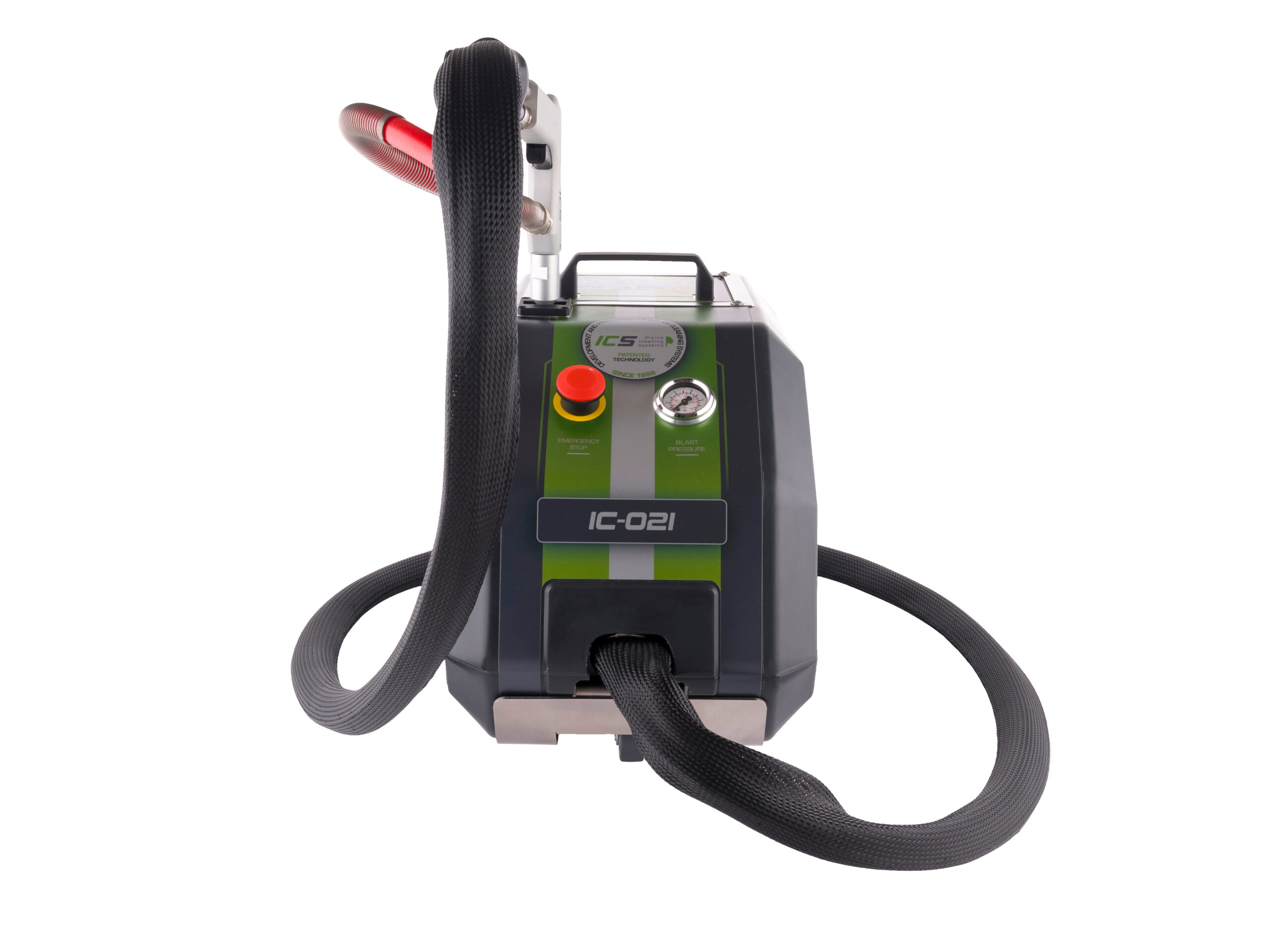
IC 021
The IC 021 is the low-air-demand option in this selection, with a 4 kg hopper and a published 0.32–0.35 m³/min compressed-air range. Its datasheet describes it for less demanding applications. Check that its operating range and accessories match the cleaning task.
View IC 021 datasheet →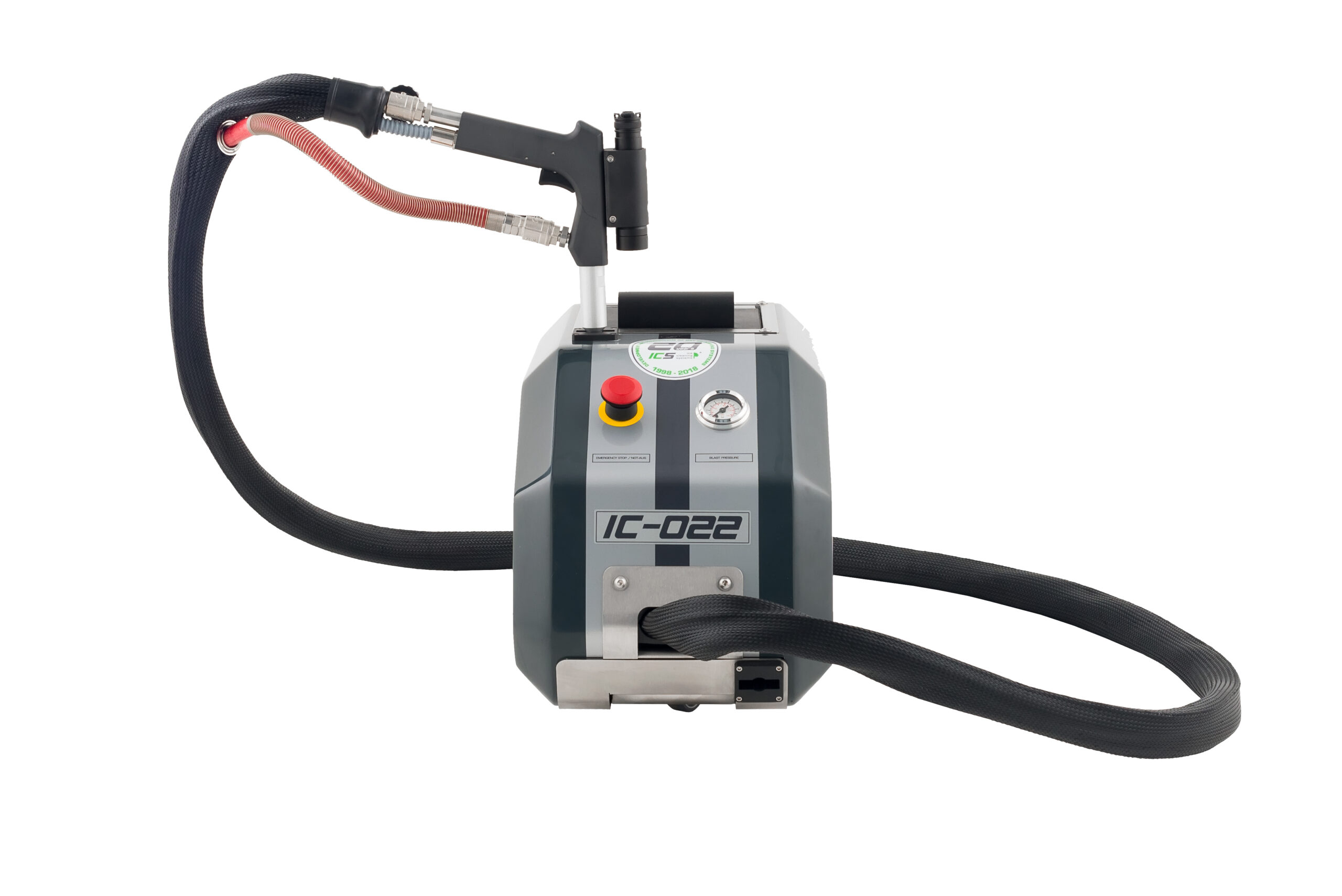
IC 022 EVO
The IC 022 EVO remains compact but has a wider published air range and accepts 1.5 mm and 3 mm pellets. It is a useful model to compare when you need portability with more flexibility than the IC 021.
View IC 022 EVO datasheet →Workshop versatility: IC 030 and IC 110 E
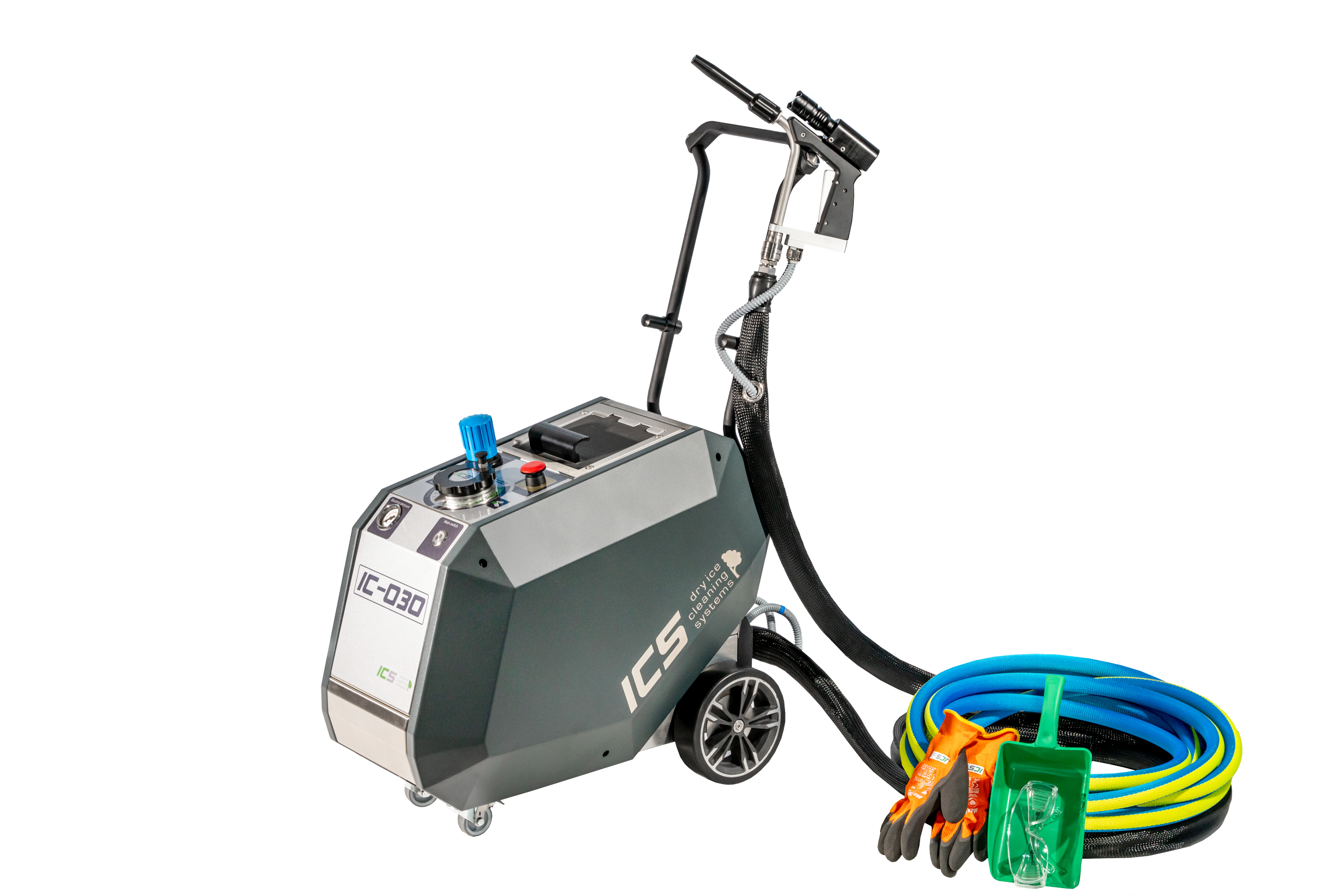
IC 030
The IC 030 offers particle-size and dry ice consumption control, with a 6 kg hopper and up to 2.5 m³/min published airflow. Compare it with the IC 110 E against the job, compressor and run time: their air ranges overlap, but the systems and published feed rates differ.
View IC 030 datasheet →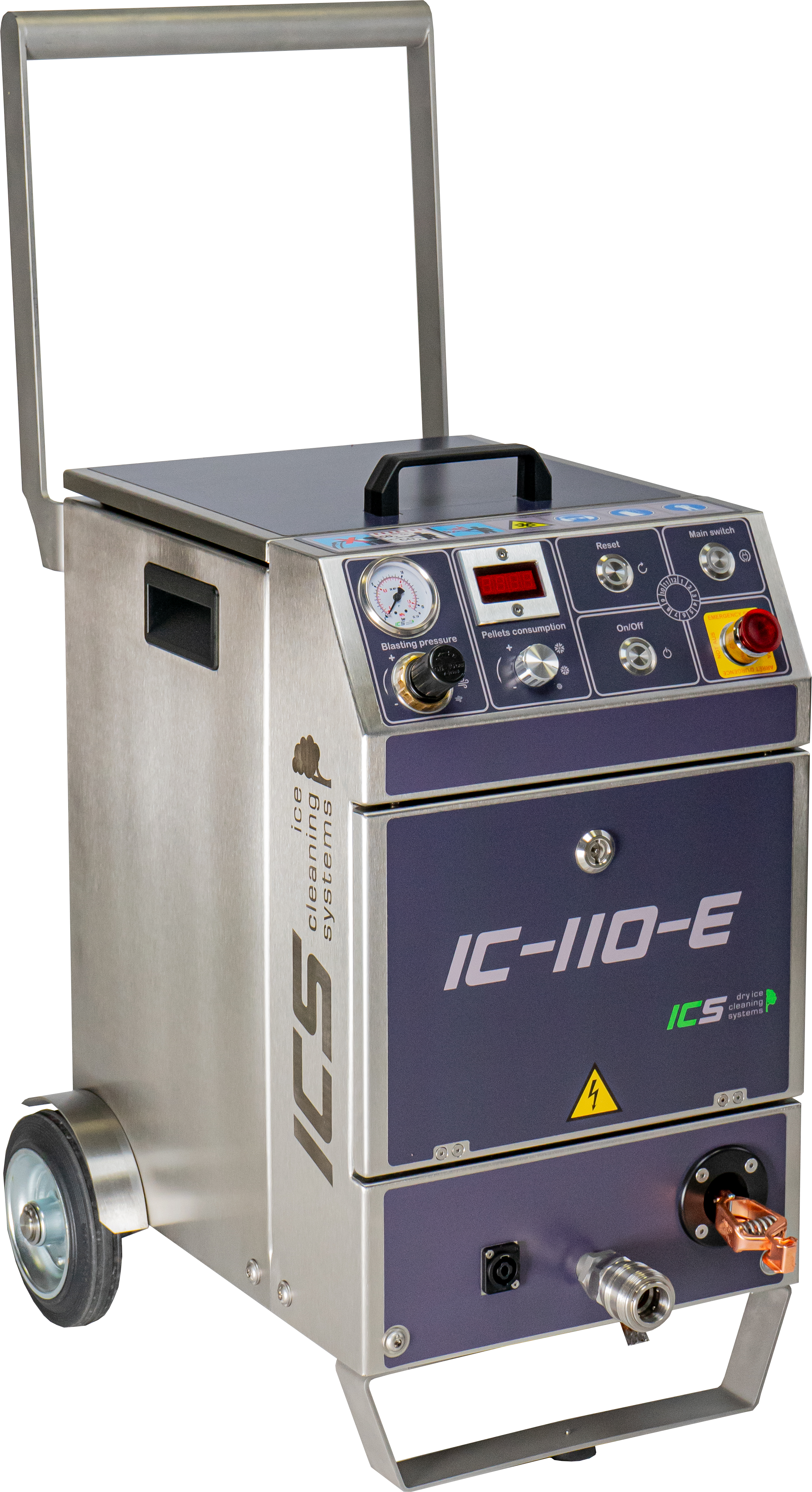
IC 110 E
The IC 110 E is an electric one-hose machine with a 17 kg insulated hopper and up to 4.5 m³/min published airflow. The linked datasheet describes both the IC 110 E and E PLUS; check the package contents on the quotation.
View IC 110 E / PLUS datasheet →Higher-output and particle-control choices: IC 310, IC 310 S, IC 410 and IC 410 S
IC 310
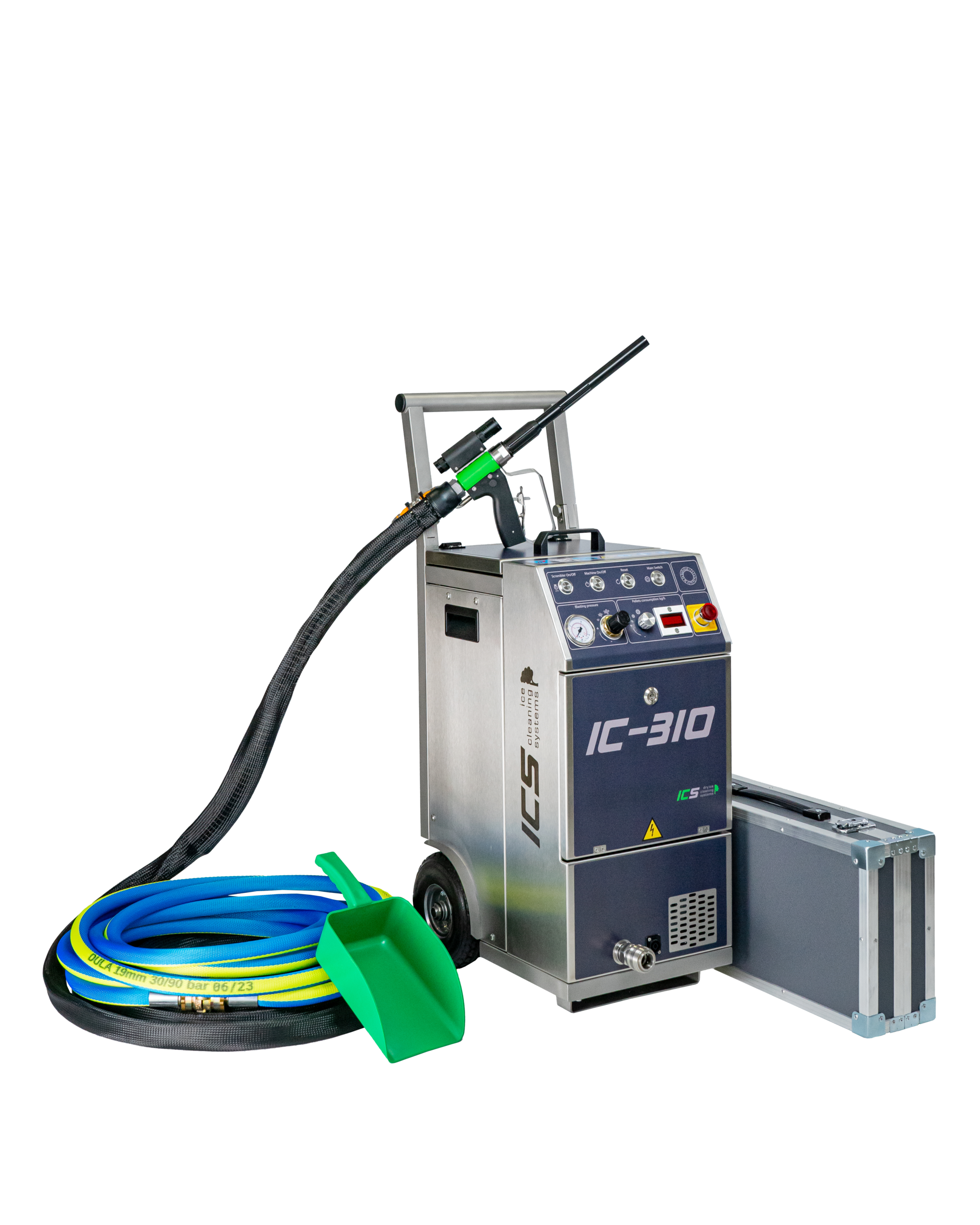
The standard IC 310 has a 13 kg hopper and published airflow of 1–12 m³/min, depending on nozzle. Compare this version when hopper capacity matters and the standard pellet setup meets the task.
View IC 310 datasheet →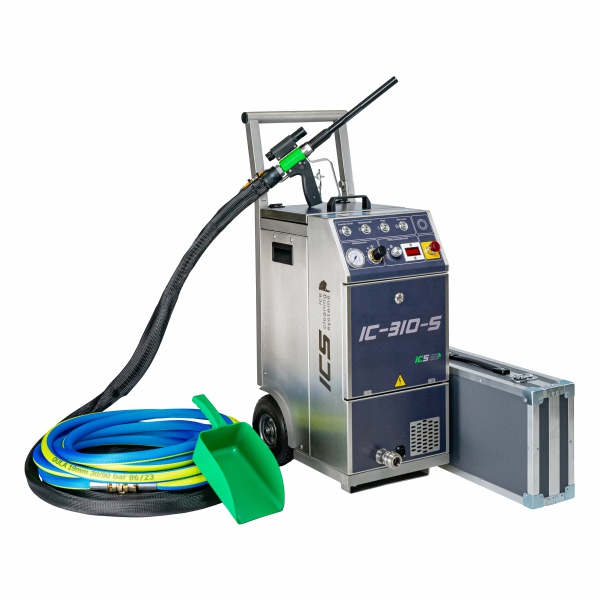
IC 310 S
The IC 310 S adds an integrated pellet-grinding function with fine and microparticle options. Its 10 kg hopper is smaller than the standard IC 310’s 13 kg hopper, so consider particle control against refill frequency and the real workload.
View IC 310 S / PLUS datasheet →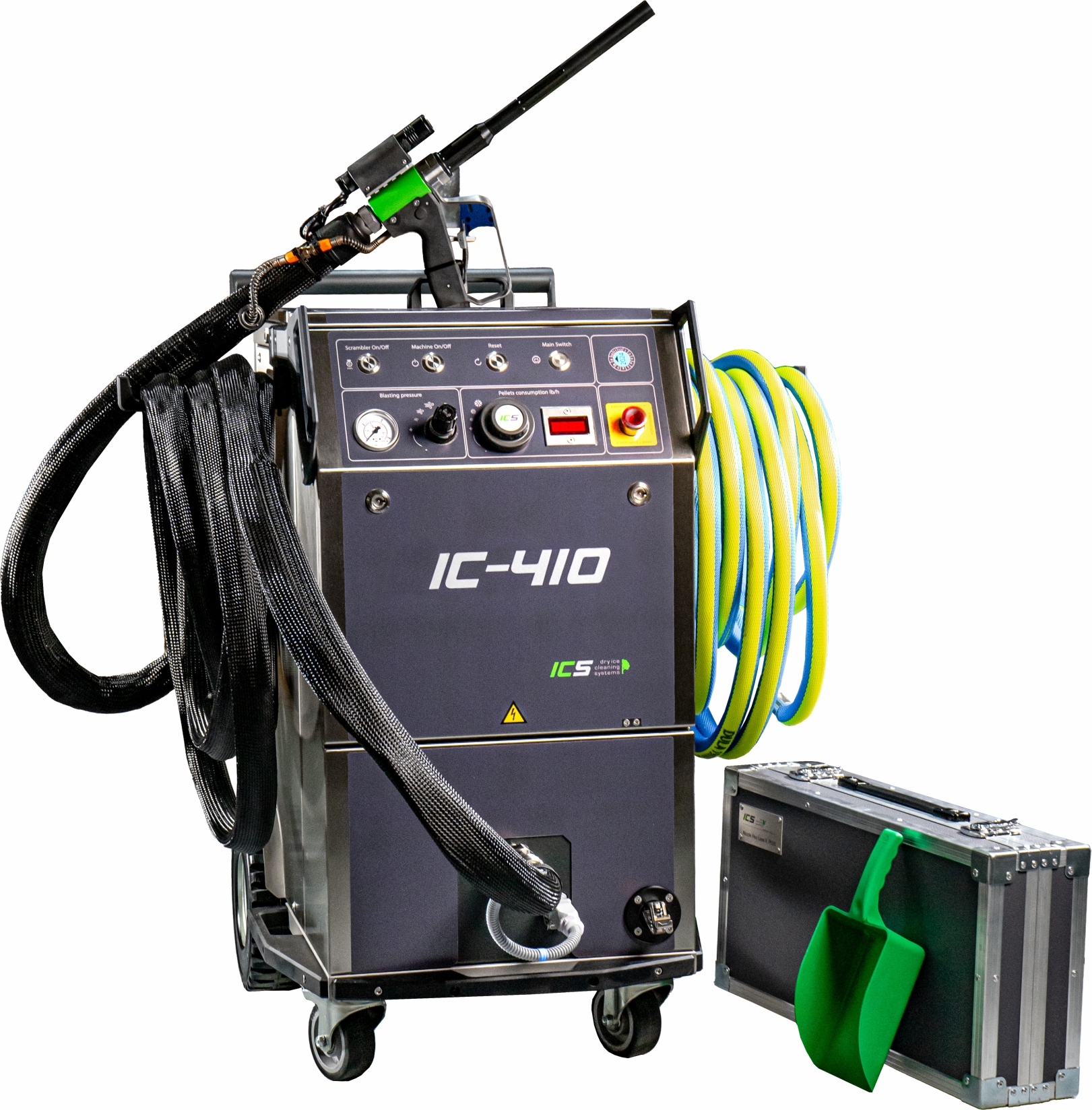
IC 410
The IC 410 has the largest hopper in this comparison at 31 kg and a published maximum air demand up to 15 m³/min, depending on nozzle. It may suit work where longer runs and hopper capacity matter and the site can support the air requirement.
View IC 410 datasheet →IC 410 S
The IC 410 S combines high published feed and airflow ranges with a four-position grinding system for smaller particle sizes. Its 25 kg hopper is smaller than the standard IC 410’s, so it is a different configuration choice, not simply a higher version of the same spec.
View IC 410 S datasheet →IC 310 vs IC 310 S, and IC 410 vs IC 410 S
The “S” models should be assessed for their particle-grinding and control features, not assumed to be identical machines with a larger specification. The supplied IC 310 S datasheet describes integrated grinding and microparticle cleaning; the standard IC 310 sheet lists a larger 13 kg hopper, compared with 10 kg on the IC 310 S. For the 410 pair, the standard IC 410 has a 31 kg hopper; the IC 410 S has a 25 kg hopper and a four-position grinder.
So the practical question is whether the work benefits from the particle options, or whether hopper capacity and refilling intervals matter more. Confirm the exact model suffix, package and accessories on the quotation.
Plan the full setup before investing
Budget for more than the machine. Include the compressor or existing air supply, aftercooler or dryer where required, hoses, nozzles, dry ice deliveries, storage and sublimation losses, operator time, servicing and spare parts. Check the electrical supply for electrically operated models and the machine’s dimensions and handling needs if it will move between sites.
Dry ice feed figures are useful for planning, but actual use varies with application and settings. Test with representative work before making a payback estimate. Where a demonstration would help, Titus first qualifies the application and purchasing requirements; demonstrations are arranged only when technically and commercially justified.
Choose a supplier that can support the machine after purchase
Ask who will train your operators, where repairs and servicing are handled, how spare parts are supplied and who you can contact when the setup needs attention. Titus Equipment is an ICS certified service partner. We handle ICS servicing, spare parts and repairs, deliver operator training after sale and remain available for ongoing support.
Questions to answer before requesting a quotation
- What are you cleaning, and what is the contaminant?
- What material, coating or finish must be protected?
- How often will you use the machine, and how long are typical runs?
- What compressor do you have, and what airflow does it deliver at the required pressure?
- What dry ice supply and pellet size are available to you?
- Do you need a portable setup or a machine that can sustain longer work periods?
- Would pellet grinding or fine-particle control help with the applications you expect?
- What training, service and spare-parts support will you need?
Choosing your first ICS dry ice blasting machine
To get started, define the cleaning jobs you intend to take on, confirm that you can provide the required compressed air and arrange a dependable dry ice supply. Then compare the machine options against your workload, application, budget and support needs. Use the datasheets to create a shortlist—not to assume the biggest machine will be the best fit. If you are unsure, get the application assessed before ordering.
Need help selecting an ICS machine?
Tell Titus what you need to clean, the surface and contamination involved, how often you will work and what compressor you have. We will review the application, compare suitable ICS models and provide pricing. Operator training, servicing, spare parts, repairs and ongoing support are available through Titus.
Discuss your application with Titus →Also see ICS dry ice blasting systems, automotive cleaning and restoration and machinery and production cleaning.